If you follow me on pretty much any other site you have already seen my posts; you already know just how excited I am about this. I am sorry if you follow me on all these sites, and it bores you. I'm sorry, but I am going to post about it anyway, because this is a book blog and there is no way in hell that I wouldn't post about my favorite author.
Today, January 10, 2012, is the release date of The Fault in Our Stars by John Green. This is a date I've been waiting for for the past . . . oh . . . seven months? More? I don't even know. I have been waiting. And waiting. And waiting.
And now it's here.
For those of you who don't know, every single copy of the first printing is signed. John Green individually signed every single one of the 150,000 books in the first printing plus 10,000 extras in case some were damaged. He spent six hours a day for over a month bent over a stack of papers. He got nerve damage in his hand and he still didn't stop. I have never seen a better example of dedication. Why did he do it? He did it as a thank you. The inpour of preorders from nerdfighters across the globe was practically a phenomenon. It happened before anyone ever saw the pitch, or the cover. When all we knew was that it was a book, and it was John's. Penguin looked at the thousands and thousands and thousands of fans and thought, Hmm. I guess they really, really want it to come out, don't they?
Let's move the publishing date up three months.
And this was John's way of saying thank you. This was his gift to his readers, this undeniable link. Those hours spent signing and those hours we spent watching him, those hours we will spend bent over the pages of his book. It's a promise there, between the writer and the reader. With all the drama in this past week, so many people have forgotten that we work in partnership. We cannot exist without the other. Authors need readers, and John Green has so much more than readers. He has a community hundreds of thousands strong that loves his writing and his ideas and just . . . him. Because he is a brilliant author. Because he is an amazing person.
If you haven't preordered TFiOS . . . go out and buy it. Go now, before all the signatures are gone. Go and get a book, one of 160,000 signed by John Green himself so that every last reader could get at least a little piece of that writer-reader relationship to keep all for themselves.
Tuesday, January 10, 2012

Monday, January 9, 2012
All These Things I've Done
In 2083, chocolate and coffee are illegal, paper is hard to find, water is carefully rationed, and New York City is rife with crime and poverty. And yet, for Anya Balanchine, the sixteen-year-old daughter of the city's most notorious (and dead) crime boss, life is fairly routine. It consists of going to school, taking care of her siblings and her dying grandmother, trying to avoid falling in love with the new assistant D.A.'s son, and avoiding her loser ex-boyfriend. That is until her ex is accidently poisoned by the chocolate her family manufactures and the police think she's to blame. Suddenly, Anya finds herself thrust unwillingly into the spotlight--at school, in the news, and most importantly, within her mafia family.

Engrossing and suspenseful, All These Things I've Done is an utterly unique, unputdownable read that blends both the familiar and the fantastic.
This is the first book I've given up on in a long time.
And some might think it strange. Because, looking at it objectively . . . is it better than Twilight? Is it better than Evermore? Is it better than Hush, Hush?
I think I'd have to say yes to all of those. But the difference is, however terrible those books may be, the one thing they did do is keep me interested. They kept me invested enough in the story that I wanted to know how it all turned out. And that just did not happen with All These Things I've Done.
There are a few main reasons why I gave this up.
1. The writing. It wasn't horrid writing, and there were a few moments when it shone, but the style really did not work for me. From what I've gathered, it's Anya writing this whole account. I've read several books that worked that angle wonderfully. This did not. The writing was awkward and distant, and the random interjections only annoyed me. Also, little dialogue gems such as this didn't really help my opinion of this:
"His name's Goodwin but he goes by Win. Isn't that OMG?"
Uhhh, yeah.
2. The characters. I didn't hate the main character, Anya. I really didn't. There were a few moments where I even liked her. But most of the time, I just felt so removed from everything that was happening, and couldn't bring myself to care. Also, certain characters (coughScarletandNattycough) annoyed the hell out of me. They were flat, simple, and irritating, which is all the worse because I'm pretty certain we're supposed to love them. Win, the love interest, was . . . okay. He didn't upset me, but there was just no spark. I felt no chemistry between him and Anya and couldn't understand why he was interested in her. She hardly encouraged him.
3. The strong Christian presence. This part is just my bias. I tend to dislike books that have a strong religious presence, regardless of what the religion is. Some Christians may absolutely love this aspect of the book. It just really didn't work for me.
4. Related to the last one: Anya being the "good Christian girl." Whenever she would think bad thoughts, it would be all No, no, I can't think these things, because I am a good Christian girl. Whenever the possibility of sex was presented to her it would be all No, no, I would never have sex, because I am a good Christian girl. Now don't get me wrong--I have no problem with those who choose not to think "bad thoughts" about others, or who choose to abstain until marriage. That's there prerogative. What upset me was that these were painted as bad things, like being pure-minded and abstaining made you a saint and daring to think bad thoughts about someone who almost date-raped you or, gasp, having sex before marriage made you a terrible person.
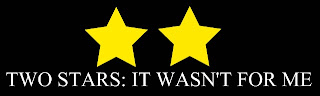
This is not a horrible book. This is really one of those cases where I just have to say that it was not for me. Some of you may love it, or at least like it a lot more than I did. (Plus, you might just want that gorgeous cover. SO PRETTY. And did I mention that the hard cover is patterned to look like chocolate?) But personally, I could not make myself finish this.
2 stars.

Sunday, January 8, 2012
Legend
What was once the western United States is now home to the Republic, a nation perpetually at war with its neighbors. Born into an elite family in one of the Republic's wealthiest districts, fifteen-year-old June is a prodigy being groomed for success in the Republic's highest military circles. Born into the slums, fifteen-year-old Day is the country's most wanted criminal. But his motives may not be as malicious as they seem.
From very different worlds, June and Day have no reason to cross paths - until the day June's brother, Metias, is murdered and Day becomes the prime suspect. Caught in the ultimate game of cat and mouse, Day is in a race for his family's survival, while June seeks to avenge Metias' death. But in a shocking turn of events, the two uncover the truth of what has really brought them together, and the sinister lengths their country will go to keep its secrets.
Full of nonstop action, suspense, and romance, this novel is sure to move readers as much as it thrills.

This is one of my new favorite dystopians.
The fact is, this isn't one of those books that struck some deep chord inside of me. It isn't a book that changed my outlook on life, and it isn't a book that talks about some pressing issue in society today. What is it, then? It's an incredibly entertaining book with wonderfully developed characters, smooth writing, and action that never stops. It's a book that will grab you from the start and you won't realize it's over till you hit the final page.
My favorite part of Legend was probably the characters. Some side characters were rather one dimensional, like the Commander, or Chian. But then you had those really wonderful side characters; you had Tess, young and sweet and capable and utterly devoted to Day. You have Metias, who I can't really say much about without giving away the book. You have Thomas, who can be so terrible at times, who follows orders without thought, but who still cares about June, who probably thinks he's doing right.
And then there's the main characters, Day and June. I have a love-hate relationship with dual POV. When it's done right, it can be excellent. Sometimes it's exactly what a book needs. But when it's done wrong, it ruins the book for me. Maybe the author switches POVs at the most awkward and unnecessary of times; maybe the two narrators sound completely identical (this is particularly painful if it is a boy and a girl). In any case, it's not fun to read through.
Marie Lu did it right.
Day and June were two entirely different people. They were both intelligent, observant, agile, attractive. In many ways, they were very similar people. But their minds, their voices, were entirely different, and I loved that. Also, get this--Day . . . sounds like . . . a boy. An honest-to-G-d boy. And June, the supposed genius? Sounds like a genius. Not in an obnoxious, I-will-shove-your-genius-face-into-these-pages kind of genius, but simply someone far more intelligent and observant than average.
They're both talented to the point that some may label them Mary Sue/Gary Stu. But to me, they never came off that way. I think there are three main reasons. One: they had emotions. They had emotions, ones that leapt off the page. When a character we know for only one chapter died, I almost cried. Whatever June and Day were going through, I felt it, as if I were the one who had lost a loved one. Two: they had families. They had family members, existing family members, that they cared about, that they would do anything for, that they placed above everything else. In the YA world, where most families are dead or completely inconsequential, the huge role their families played in this not only set Legend apart but made the characters far more sympathetic. And three: Their dynamic. Quite simply, their dynamic was brilliant. June and Day had incredible chemistry. I am not just talking about the romantic element, or even just with each other. The way they acted and reacted with this whole set of characters was just so realistic and genuine that I wanted to give Marie Lu a big high five. A really, really big high five.
The writing did exactly what it needed to: it let you focus on the characters and the plot. There wasn't anything exceptional about the writing, but there didn't need to be; it moved the plot along and didn't distract the reader. In an action-filled dystopian novel like this, simple writing is often the best choice.
And then there's the plot. It's not one of those insanely unique and complicated plots that you just sit there gaping over and wondering how in the world the author ever concocted it. But it was gripping and fascinating and extremely entertaining, and that's all I really ask of any plot.
I should be deducting a star, because there is little-to-no world-building. We get almost no explanation about how the world came to be this way. We aren't given a very clear idea of what the Republic and Colonies even look like (hoping there'll be a map in the next one). But honestly? I'm giving this five stars. Some people rarely give five stars because they use that rating to mean something was flawless. I don't. I have almost never found a book without flaw. I give a book five stars when it was so fantastic that I can't give it anything lower. That was Legend for me.
Here's hoping the next one comes out soon! There wasn't a cliffhanger, thank G-d, but I still can't wait for the next book in this series.Thank you for being brilliant, Marie Lu.
5 stars.

Saturday, January 7, 2012
Across the Universe
Seventeen-year-old Amy joins her parents as frozen cargo aboard the vast spaceship Godspeed and expects to awaken on a new planet, three hundred years in the future. Never could she have known that her frozen slumber would come to an end fifty years too soon and that she would be thrust into the brave new world of a spaceship that lives by its own rules.
Amy quickly realizes that her awakening was no mere computer malfunction. Someone - one of the few thousand inhabitants of the spaceship - tried to kill her. And if Amy doesn't do something soon, her parents will be next.
Now, Amy must race to unlock Godspeed's hidden secrets. But out of her list of murder suspects, there's only one who matters: Elder, the future leader of the ship and the love she could never have seen coming.

I have no frexing idea what to rate this, so I simply won't rate it anything.
Whenever I decide on a low rating, I remember that
the plot was incredibly unique
the science was realistic, but not so in-depth as to lose those who aren't into that
the characters, however long they took to be developed, were people, real people, with thoughts and flaws and confusions and ideas
the suspense, once it came, was incredible
sometimes, the writing was beautiful, or powerful, and I would read it over several times
the way she blended dystopian ideas with science fiction was incredibly different and incredibly interesting
the moral questions it raised still haunt me
this book had many secrets up its sleeve
But then when I decide to give it a million stars, I remember that
the killer was made obvious in the first 100 pages
until he actually grew some balls (or shall I say chutz) Elder sounded like a whiny, lusty child
sometimes the writing was poor, or repetitive, or jumbled
there were an uncomfortable amount of typos
the book did not grip me until several hundred pages in
some of the made up words were used in so many contexts that I had no frexing idea what they meant
one huge, huge, HUGE plot twist had basically no foreshadowing whatsoever and related to that
THE ENDING WAS. WAS JUST. WHAT THE FREX WAS THAT? WHAT THE FREX KIND OF ENDING WAS THAT? I JUST. I DON'T EVEN KNOW.
So uh yeah. No rating. Would I recommend it? Yes, I would. Will I be reading A Million Suns? Hell yes. Will I be terrified?
Pretty much.
Amy quickly realizes that her awakening was no mere computer malfunction. Someone - one of the few thousand inhabitants of the spaceship - tried to kill her. And if Amy doesn't do something soon, her parents will be next.
Now, Amy must race to unlock Godspeed's hidden secrets. But out of her list of murder suspects, there's only one who matters: Elder, the future leader of the ship and the love she could never have seen coming.
Whenever I decide on a low rating, I remember that
the plot was incredibly unique
the science was realistic, but not so in-depth as to lose those who aren't into that
the characters, however long they took to be developed, were people, real people, with thoughts and flaws and confusions and ideas
the suspense, once it came, was incredible
sometimes, the writing was beautiful, or powerful, and I would read it over several times
the way she blended dystopian ideas with science fiction was incredibly different and incredibly interesting
the moral questions it raised still haunt me
this book had many secrets up its sleeve
But then when I decide to give it a million stars, I remember that
the killer was made obvious in the first 100 pages
until he actually grew some balls (or shall I say chutz) Elder sounded like a whiny, lusty child
sometimes the writing was poor, or repetitive, or jumbled
there were an uncomfortable amount of typos
the book did not grip me until several hundred pages in
some of the made up words were used in so many contexts that I had no frexing idea what they meant
one huge, huge, HUGE plot twist had basically no foreshadowing whatsoever and related to that
THE ENDING WAS. WAS JUST. WHAT THE FREX WAS THAT? WHAT THE FREX KIND OF ENDING WAS THAT? I JUST. I DON'T EVEN KNOW.
So uh yeah. No rating. Would I recommend it? Yes, I would. Will I be reading A Million Suns? Hell yes. Will I be terrified?
Pretty much.
Thursday, January 5, 2012
Anna Dressed in Blood
Just your average boy-meets-girl, girl-kills-people story. . .
Cas Lowood has inherited an unusual vocation: He kills the dead.
So did his father before him, until his gruesome murder by a ghost he sought to kill. Now, armed with his father's mysterious and deadly athame, Cas travels the country with his kitchen-witch mother and their spirit-sniffing cat. Together they follow legends and local lore, trying to keep up with the murderous dead—keeping pesky things like the future and friends at bay.
When they arrive in a new town in search of a ghost the locals call Anna Dressed in Blood, Cas doesn't expect anything outside of the ordinary: move, hunt, kill. What he finds instead is a girl entangled in curses and rage, a ghost like he's never faced before. She still wears the dress she wore on the day of her brutal murder in 1958: once white, but now stained red and dripping blood. Since her death, Anna has killed any and every person who has dared to step into the deserted Victorian she used to call home.
And she, for whatever reason, spares his life.

I didn't know how I would feel about this one. On the one hand, it had been receiving a lot of really positive reviews. And the cover is absolutely and completely stunning (also a perfect depiction of Anna and her house). But this is definitely not my usual genre, and I tend to be slightly mistrustful of the really gorgeous covers because they often conceal shoddy books.
I loved this.
I wasn't sure at first. I think it's because I was so surprised. The book seemed almost . . . chatty. That was definitely not what I had been expecting. I'd been expecting dark, gritty, haunting. I was thrown off.
But this is one of those books that just gets progressively better and better and when you finally finish the book you just sort of clutch it to your chest and ignore all the pointed stares aimed in your direction.
Like I said, this genre is outside my norm, but in the best of ways. Despite the lighter atmosphere, this was still gory and creepy and awesome as hell. It's an incredibly original idea, and the pacing was perfect--not too fast, not too slow, just enough foreshadowing and just enough of a shock factor when you figure everything out at the end. Kudos to Blake for coming up with such a kickass plot in a market where romance has a tendency to take the reins.
I will say one thing: This book did not terrify me. However, I think that's partially due to the inappropriate mood. I read this primarily in school, during the day, surrounded by people, or at home, during the day, surrounded by people. It's hard to believe in monsters when the sun's still out. It's when you can no longer see them that they become real.
Blake's writing was very smooth. Most of the time it was very informal; we were in Cas's head the entire time, with him as he wondered and agonized and, uh, slayed ghosts. While the writing was usually fairly simple, it really shone when describing the ghosts, Anna in particular. I could picture them perfectly, every frightening detail.
My favorite part of the book, though, would have to be the characters. I really liked Cas. He was much more . . . real than I thought he would be. He wasn't some badass male version of Buffy the Vampire Slayer (This comparison is actually made in the book--high five, Blake, high five); he was, quite simply, a real boy with real thoughts and real limitations who only became a macho killer with the athame in his hand. Sometimes he seemed quite a bit younger than seventeen, but that didn't really bug me. I liked all the side characters--Thomas, so awkward and eager; Cas's mother; Morfrand. I loved Carmel and how well she defied the popular girl stereotype.
But I'm going to tell you what nearly all the other reviews have said: Anna stole the spotlight.
She was just . . . perfect. Not perfect as in she herself was flawless; perfect as in her characterization was flawless. As I read through the book, I just thought, If a girl was killed and turned into a murderous ghost for half a century, this is exactly what she would be like. She was on the quiet side, but she had fight. She was wracked with guilt, but she didn't let it stop her. She was powerful and deadly and unsure, scared and curious and stubborn. And I loved her to pieces.
That ending may or may not have made me bury my face in the book and shun people for a solid five minutes. I cannot wait for Girl of Nightmares.
5 stars.
Sunday, January 1, 2012
Divergent
In Beatrice Prior's dystopian Chicago, society is divided into five factions, each dedicated to the cultivation of a particular virtue—Candor (the honest), Abnegation (the selfless), Dauntless (the brave), Amity (the peaceful), and Erudite (the intelligent). On an appointed day of every year, all sixteen-year-olds must select the faction to which they will devote the rest of their lives. For Beatrice, the decision is between staying with her family and being who she really is—she can't have both. So she makes a choice that surprises everyone, including herself.
During the highly competitive initiation that follows, Beatrice renames herself Tris and struggles to determine who her friends really are—and where, exactly, a romance with a sometimes fascinating, sometimes infuriating boy fits into the life she's chosen. But Tris also has a secret, one she's kept hidden from everyone because she's been warned it can mean death. And as she discovers a growing conflict that threatens to unravel her seemingly perfect society, she also learns that her secret might help her save those she loves… or it might destroy her.
Debut author Veronica Roth bursts onto the literary scene with the first book in the Divergent series—dystopian thrillers filled with electrifying decisions, heartbreaking betrayals, stunning consequences, and unexpected romance.

I was able to suspend my disbelief.
That's basically what I saw from all the positive reviews on this. I enjoyed this, because I was able to suspend my disbelief. Is the society at all realistic? Hell no. Is there any explanation as to how it became the way it is today? Nope.
But I was able to put that out of my mind for 487 pages and just enjoy a fast-moving, well-paced plot, spare but powerful writing, and great characters. This book was readable, and I'd place that over world-building any day.
I really liked the plot. I've seen a lot of people complain about this being 400 pages of initiation and less than 100 pages of plot, but that didn't really irk me, because a) The initiation was a big PART of the plot, and b) I felt like there was enough content that did not just have to do with initiation and furthered the overall plot that it didn't matter. I did think the ending was slightly sudden, but not terribly.
Roth's writing was very good, especially for a debut author. It wasn't beautiful, nothing that really stands out, but that's okay. This book didn't need beautiful writing, it needed writing that would further the plot and characterization along. And while it wasn't beautiful, there were some very powerful quotes. Sometimes things pack more of a punch when stated simply.
There were also a lot of really cool scenes. While I do get the feeling that some of them were just included because Roth really, really wanted to write them, it didn't bother me, because I really, really enjoyed reading them. The action makes this practically unputdownable. It's 487 pages, but that's a very short 487 pages.
Though the plot was the driving force of Divergent, what really did it for me was the characters. I loved Roth's characters. I loved Tris's friends, flawed and funny and supportive as they were. I loved her family, confused and secretive and selfless. I loved the villains, who shall remain nameless, for being awesome villains, though I do wish we were shown a bit more humanity in them.
I loved Four, for being a real person. For not being perfect, but doing his best. For being adorable and tough. For not treating Tris like a damsel in distress, but like an equal.
And I loved Tris, for being a badass. There are other reasons I loved her: because she can be both selfless and selfish, because she can be both cruel and kind, brave and cowardly, strong and weak, stubborn and understanding. But mainly, I just loved that she was a badass. YA needs more girls like her.
I do have to deduct a star for the world-building, because while it did not taint my enjoyment, world-building is a critical part of any dystopia, and this world was completely implausible. However, despite that, this was an excellent read. I'm glad to see it was worth the hype. Can't wait for Insurgent.
4 stars.

Subscribe to:
Posts (Atom)